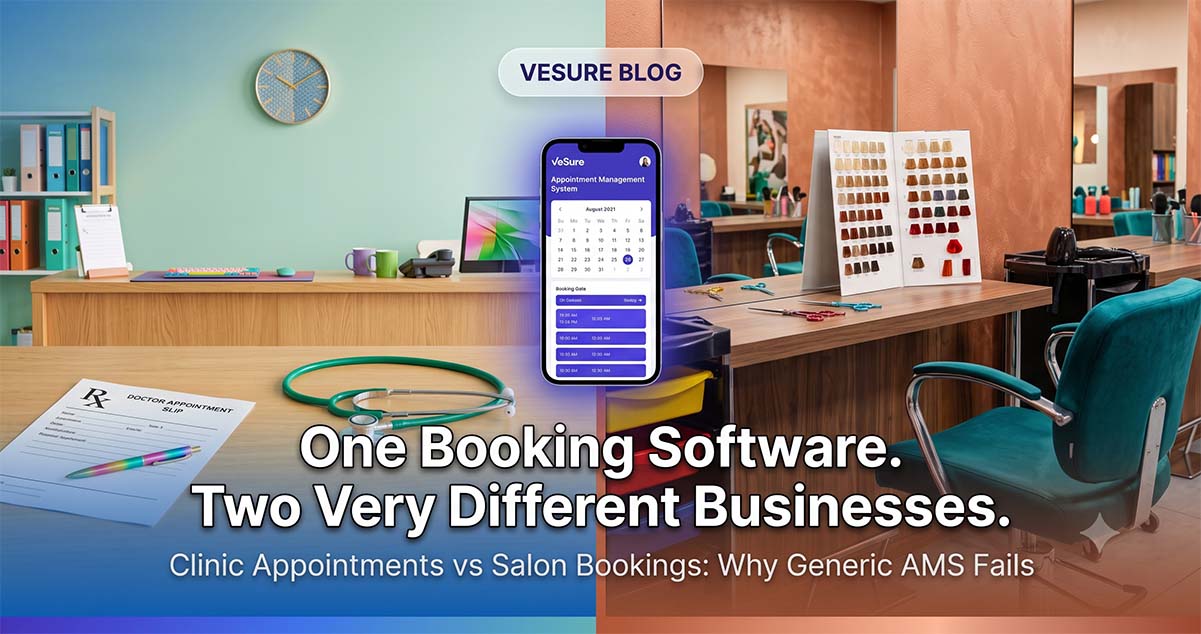
Both the clinic and the salon operate by appointment, but it pretty much ends there. An example: A clinic requires patient history safeguarded and schedules coordinated, a salon needs to pair a client with the right stylist and be able to work walk-ins in alongside bookings.
By default, generic appointment scheduling software is bound to recognize both in the same way, and herein lies its shortcoming. So here is what happens differently and how you can spot an Appointment Management System (AMS) for each.
Quick Answer
Clinics need appointment software built around patient history, doctor-specific scheduling, and integration with billing and health records. Salons and spas need staff-service matching, walk-in handling, and retail add-on tracking. A generic booking calendar handles neither well; the right AMS is chosen by vertical, not just by feature checklist.
What Clinics Actually Need From Appointment Software
Here, the booking system of a clinic should be able to do much more than just reserve a time slot. These appointments not only correlate with a certain physician, but they also come with a patient's medical history along with some form of insurance or billing information, which has to be carried throughout visits.
The practice of book-2, show-1 is not just irritating for patients: it disrupts care, and causes bottlenecks in waiting-room queues.
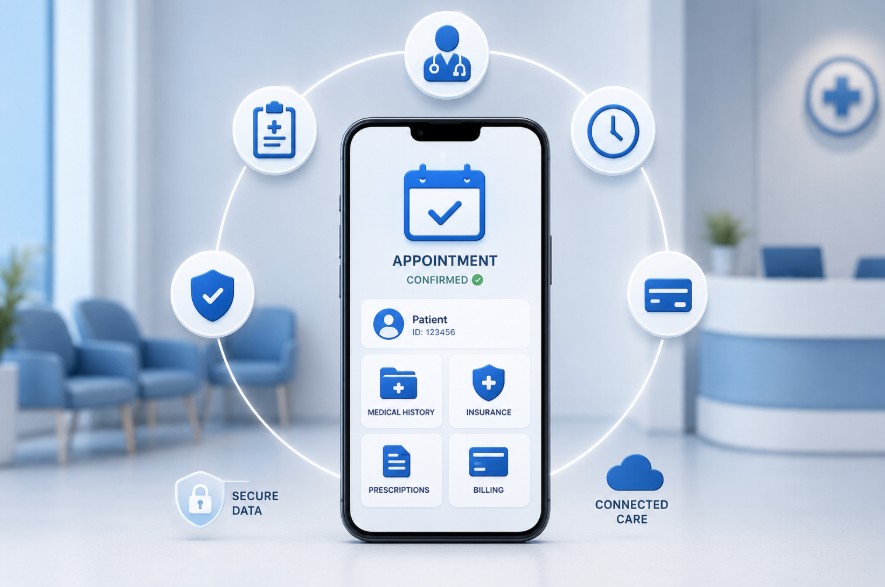
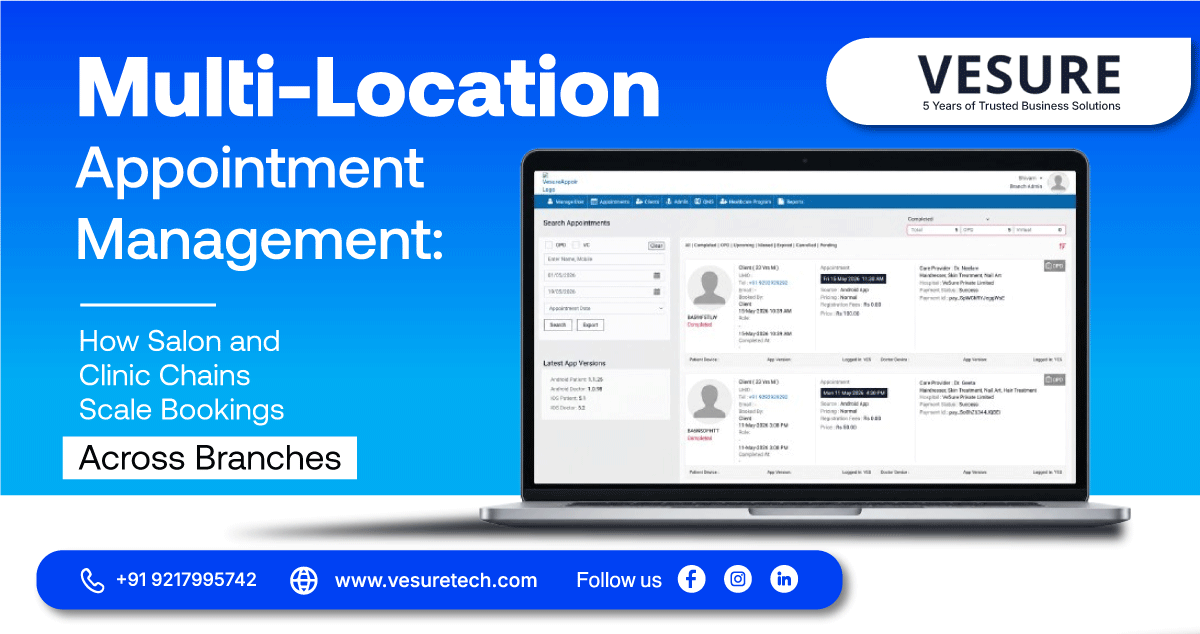
For multi-doctor clinics, the AMS must keep doctor-specific schedules (leave and OPD hours) and ideally connect to a Healthcare Information System (HIS) so appointment history, prescriptions, and billing sit in one continuous record rather than being broken up across different tools.
What Salons and Spas Actually Need
A somewhat different example would be a scheduling problem, typical of salons. Clients usually have a favorite stylist, services take different amounts of time (not the same for a haircut and a spa service), and walk-ins need to be arranged around booked clients without causing overlaps.
Personalised experience and client history: Knowing a client's last service or product preference, salons also benefit from tying bookings to retail sales (hair products, add-on services) at the checkout, which a clinics-only system usually wouldn't require.
What Coaching Centers and Consultants Need
Consultancy, Coaching centres, and single-practitioner professionals all fall somewhere in between the two. Usually, simpler calendar management and automated reminders used to reduce no-shows would be required without the complications of multi-doctor scheduling or retail add-ons. In this segment, the speed of booking and trust with reminders are more critical than the deep record.
Where a Generic Booking Tool Breaks Down
- No differentiation between staff/doctor specialization, so bookings get assigned without matching skill or availability correctly
- No patient or client history tied to the appointment, forcing manual lookup elsewhere
- No handling for variable service duration, common in salons and clinics alike
- No connection to billing or health records, creating duplicate data entry
- Generic reminder templates that don't reflect the tone or urgency needed for healthcare vs. beauty services
Use Case: A Multi-Doctor Clinic Reduces No-Shows and Scheduling Conflicts
A multi-doctor clinic handled bookings using a shared calendar and telephone confirmations, as different doctors' slots were booked manually by two members of staff, leading to double bookings. VeSure's Appointment Management System: Each doctor had a separate calendar, and you could see each doctor's calendar in real time, along with automated reminders (sent before every service).
Since appointment records might be tied to the billing workflow of your clinic, front desk staff no longer had to retrieve a patient's history separately when they arrived, allowing less time per check-in and reducing missed appointments because of automated reminders.
Conclusion
The best AMS is not the one with the most features; it is built on how your unique business really books, serves, and follows up with clients. This brings us to why a clinic, salon, and coaching center would all need appointment software - requesting the same from these three is where most scheduling migraines begin.
FAQs
Can one appointment system work for both a clinic and a salon?
Yes, technically, but it is only going to do a disservice to one or both. Clinics required patient histories and a doctor-reservation system, while salons needed employee-service matching with retailing capabilities. Well-built AMS, which are vertical-specific and predictable in nature, work much better than plug-and-play calendars!
How does appointment software reduce no-shows?
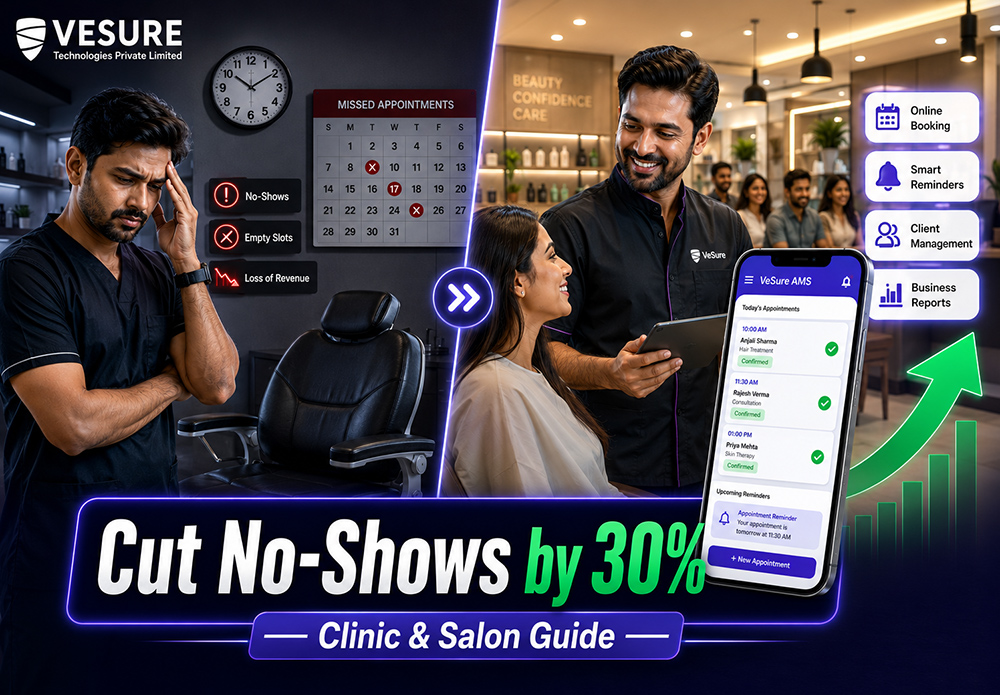
The best way to reduce no-shows - by some margin - is automated reminders (sms or WhatsApp) before the appointment, as most of these missed appointments happen not because patients do not want to come but simply forget about it.
Should a clinic's AMS connect to its billing system?
Yes. The separate systems for appointment, patient history, and billing lead to duplicate data entry by the front-desk staff and long wait times.
What is the difference between an appointment scheduling system and appointment scheduling software?
A scheduling system is typically a manual or semi-manual process (a sign-up book, shared calendar, basic tool), whereas scheduling software automates bookings and reminders and, in an actual AMS, will integrate with records and billing.
Does VeSure's AMS support multiple staff or doctor calendars?
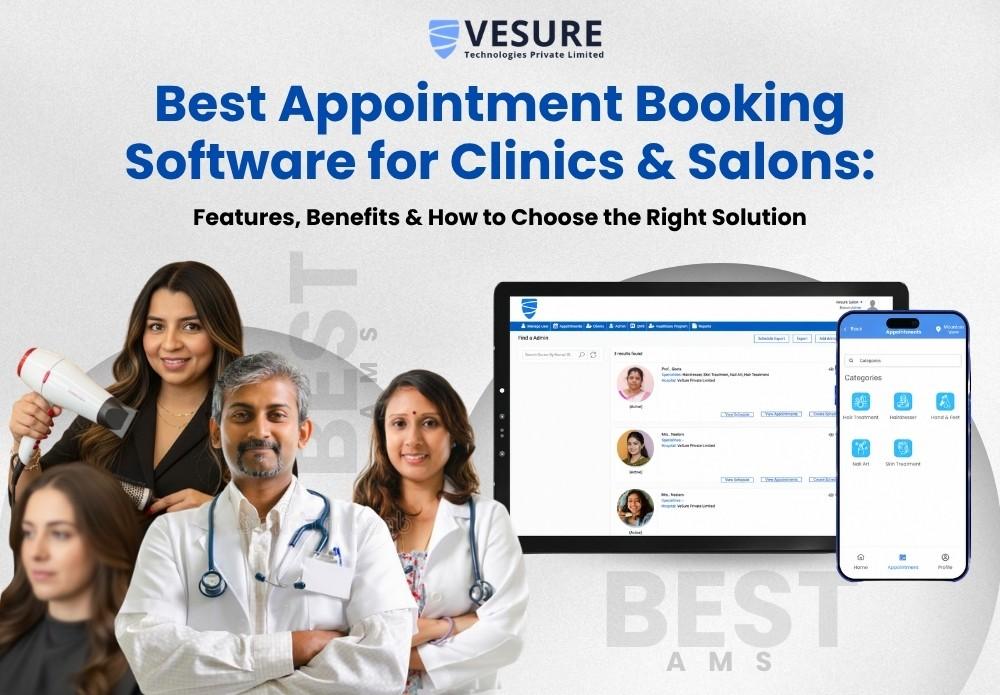
Yes. Appointment Management System - VeSure has various configurable options tailored to the setup of your clinic, salon, spa, or consultancy, like individual staff/doctor calendars, conflict prevention, automated reminders, etc.
Ready to see this in action? Book a free demo at vesuretech.com/book-a-demo - VeSure Technologies Private Limited.