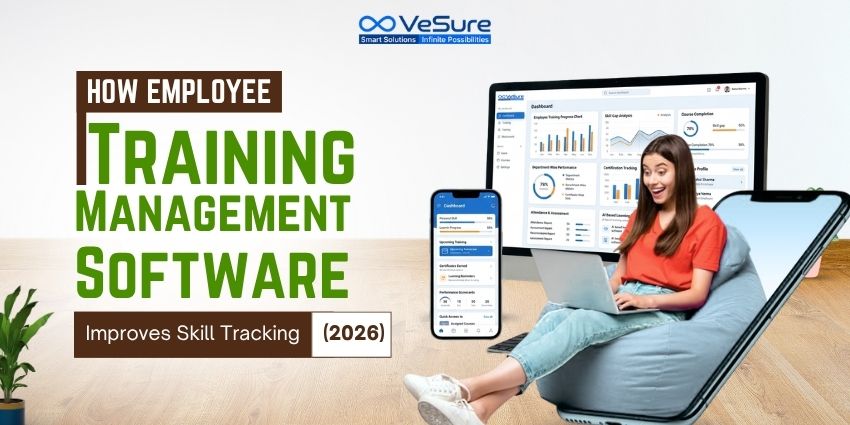
Most companies spend a real budget on employee training every year. Very few actually know what came out of it. Did the sales team retain the new pitch? Did the support staff really learn the new product?
Which employees are certified, and whose certificates expired last month? When the answers live in scattered Excel sheets and forwarded email confirmations, training stops being an investment and starts becoming overhead.
Employee training management software fixes that gap. It turns every course, assessment, certification, and skill into trackable data so HR and L&D teams can finally see what's working, where the skill gaps are, and which employees are ready for the next role. This guide breaks down how it works, where it delivers measurable returns, and what to look for when choosing one for your business.
Table of Contents
- What is Employee Training Management Software?
- Why Skill Tracking Matters for Business Growth
- How Training Software Improves Skill Tracking: Core Ways
- VeSure LMS: Built for Indian Businesses and Training Teams
- Real Use Cases Across Industries
- How to Implement Training Software the Right Way
- Common Mistakes to Avoid
- Frequently Asked Questions
What is Employee Training Management Software?
Employee training management software is a digital platform that lets a business plan, deliver, track, and measure employee learning from one place. It replaces the patchwork of Excel sheets, classroom attendance registers, and email-based assignments that most companies still depend on.
In practice, it does four things: it stores every course and learning material, assigns the right training to the right employees, tracks progress and assessment scores in real time, and reports on skills, certifications, and gaps. Modern training software, also called a Learning Management System,m or LMS, is cloud-based, mobile-friendly, and built to scale with your team.
Why Skill Tracking Matters for Business Growth
Skill tracking is not just an HR exercise. It directly affects how well your business can take on new projects, launch new products, and retain good people.
Here is what happens when skills go untracked:
- Wrong people on wrong projects. You assign work based on availability, not capability,y and quality suffers.
- Repeated training that doesn't stick. Without assessment data, you cannot tell whether learning translated into skill.
- Compliance risks. Expired certifications in regulated industries can lead to penalties or worse.
- Lost promotions. Employees ready for the next role get missed because no one tracked their growth.
- Slow onboarding. New hires spend weeks figuring out what to learn instead of getting structured paths.
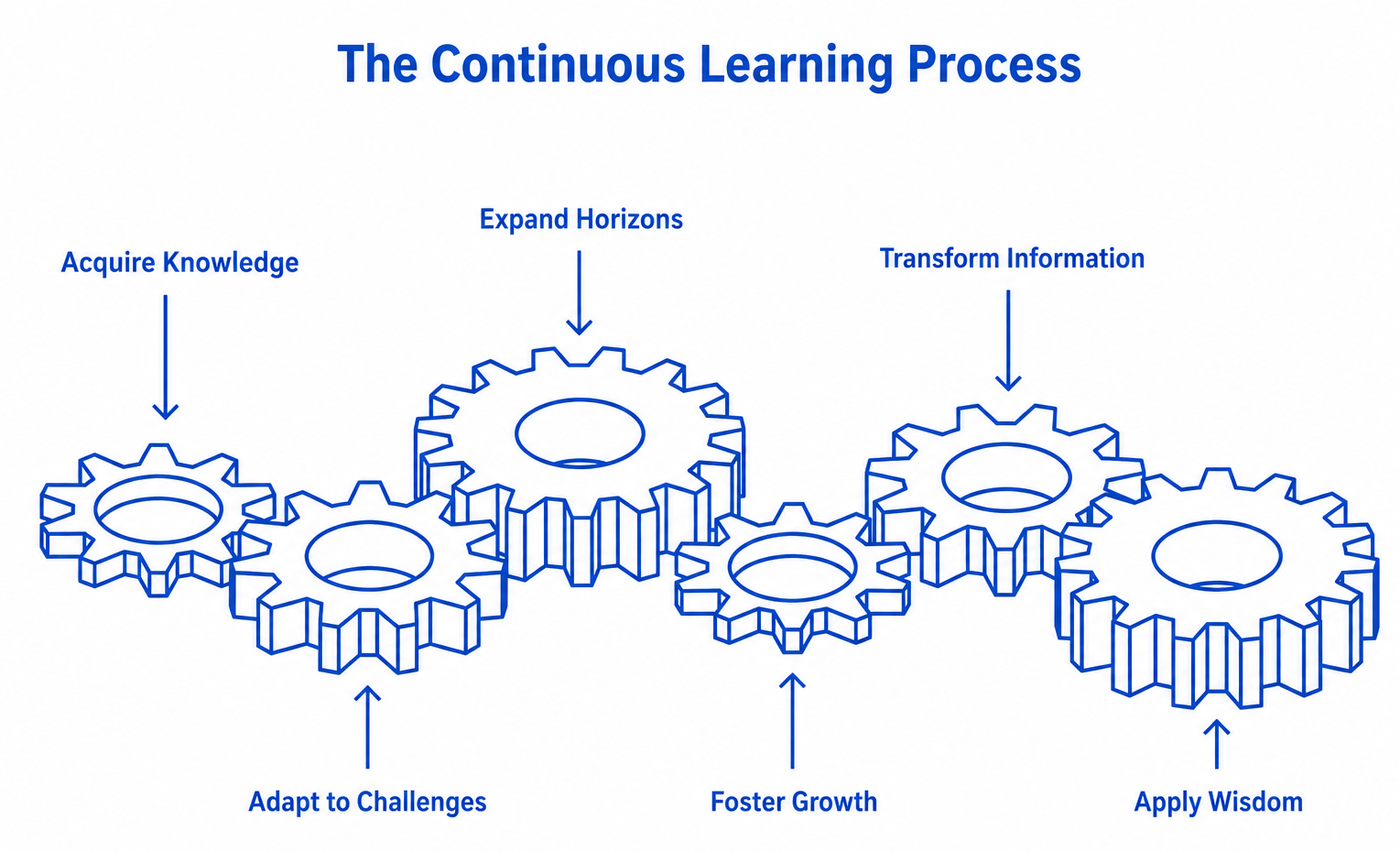
When skills are tracked properly, decisions about hiring, promotion, project allocation, and training spend become data-backed instead of guesswork.
How Employee Training Management Software Improves Skill Tracking
Here are the seven concrete ways training software changes how your business tracks and develops employee skills.
1. Centralized Skill Database
Every course completion, certification, assessment score, and learning hour gets stored against the employee's profile. HR and managers stop hunting for records across emails, drives, and personal spreadsheets. One dashboard shows the full skill profile of every employee, ee past learning, current progress, and certifications on file.
2. Automated Training Assignments by Role
Training assignments based on role, department, or skill level run automatically. New joiners get onboarding modules. Sales gets product training when a new SKU launches. Managers get leadership courses based on their level. No one waits for HR to manually push training links over email.
3. Real-Time Progress Tracking
Managers see course completion rates, test scores, learning hours, and engagement levels in real time. The training that worked is easy to identify. Employees who are falling behind receive support before it becomes a performance issue.
4. Skill Gap Analysis Against Role Requirements
Every role has a set of required skills. Training software compares what employees currently know against what their role demands and flags the gaps. Before rolling out a new tool or process, HR can instantly see who needs training and who doesn't.
5. Certification and Compliance Tracking
In regulated industries, healthcare, manufacturing, finance, and logistics certifications expire on fixed dates. Training software tracks expiry dates and sends automated reminders to both the employee and HR. Renewals get scheduled before compliance gaps open up.
6. Integration with HRMS for Complete Employee Records
Skill data is most useful when it lives alongside attendance, performance, and payroll data. When training software integrates with HRMS, every appraisal, promotion, and increment conversation has training records to back it up, not vague impressions.
7. Data-Driven Reports for Leadership
Senior leadership wants to know how training spend translates into business results. Training software gives them reports on completion rates, skill coverage by department, top-performing learners, and ROI per program. Budget conversations become easier when numbers replace assumptions.
VeSure LMS Employee Training Management Software Built for Indian Businesses
Most LMS platforms available online are built for large global enterprises. They come with hundreds of features that most growing businesses will never use and pricing that doesn't make sense for Indian SMEs and mid-market companies.
VeSure LMS is built differently. It is designed for Indian businesses, manufacturing companies running shop-floor training, IT services firms onboarding engineers at scale, EdTech founders selling courses to learners, coaching institutes, and corporate L&D teams that want a serious training platform without enterprise complexity.
What VeSure LMS gives your training team:
- Course creation and management upload videos, documents, presentations, and run live classes from one place.
- Quizzes and assessments with auto-grading, so test data flows straight into skill records.
- Certification and completion tracking with auto-generated certificates and expiry monitoring.
- Student and employee progress monitoring across courses, modules, and skills.
- Multi-instructor support for training teams with multiple trainers or department heads.
- E-commerce capability for EdTech businesses and coaching institutes that want to sell courses externally.
When used alongside VeSure HRMS, training data connects directly to employee records, making appraisals, promotions, and workforce planning data-driven instead of guesswork.
VeSure Technologies is CMMI Level 3 and ISO 27001 certified, which means your training data, employee records, and assessment scores are handled with enterprise-grade security important when you are storing personal learning data for hundreds or thousands of employees.
Real Use Case: How Indian Businesses Use Training Software for Skill Tracking
Manufacturing Company in Pune
A mid-sized auto-components manufacturer with 400+ shop-floor workers was struggling with safety certification tracking. Expired certifications were being caught only during audits, leading to penalties and rework. After moving to VeSure LMS, every operator's safety training was scheduled, tracked, and renewed before expiry. Audit-related findings dropped sharply within two quarters.
IT Services Firm in Bengaluru
A 150-person IT services company was onboarding 8-10 engineers a month with no structured technical training path. Knowledge transfer was happening through individual mentorship - slow, inconsistent, and dependent on senior availability. With a structured LMS rollout, new engineers now complete role-specific modules and pass technical assessments before joining live projects. Onboarding time came down significantly, and project quality improved because skill levels are now verified, not assumed.
Healthcare Network in Delhi NCR
A multi-clinic healthcare network needed to keep its nursing and admin staff updated on protocols, patient safety, and compliance changes. Earlier, training was conducted in person and tracked on paper. After moving to an LMS, all staff complete mandatory modules on their own schedule, and the central HR team can see real-time compliance status across every clinic location.
How to Implement Training Software the Right Way
Choosing the software is the easy part. Getting real value from it depends on the rollout. Here is a practical sequence.
- Define the core skills required for each role.
Before any course gets uploaded, list the skills every role in your business needs. Without this baseline, you cannot measure gaps later.
- Map current employee skills to the baseline.
Capture what your team already knows. This becomes your starting point for gap analysis and individual learning paths.
- Prioritize training programs by business impact.
Not every skill gap needs immediate attention. Focus first on skills that affect revenue, compliance, or customer experience.
- Assign and automate.
Let the system handle routine assignments, onboarding, role-based training, and certification renewals. Free up HR for higher-value work.
- Review reports monthly, not annually.
Training software gives you live data. Use it. Monthly reviews catch issues that annual reviews always miss.
- Integrate with your HRMS.
Skill data becomes far more useful when linked to attendance, appraisals, and payroll so training informs every people decision.
Common Mistakes Businesses Make While Using Training Software
- Uploading content without a learning path. A pile of courses is not a training program. Employees need a sequence that makes sense.
- Skipping assessments. Without tests, completion data is meaningless you can complete a video without learning anything.
- Ignoring mobile access. Shop-floor workers, field staff, and remote teams often learn from their phones. Desktop-only LMS leaves them out.
- No integration with HRMS. Disconnected training data is hard to act on. Connect it to appraisals to make it count.
- Treating training as a one-time event. Skills decay. Build refresh cycles into your training calendar.
Final Thoughts
Employee training management software is no longer a nice-to-have for growing businesses. It is the difference between training budgets that disappear into a black hole and training programs that produce measurable, visible skill improvement.
The real value is not in the courses it is in the tracking. When you know exactly what every employee has learned, what they can do, and where the gaps are, every workforce decision becomes easier and more accurate.
If your business is ready to move beyond Excel-based training tracking, explore VeSure LMS or book a free demo to see how it fits into your operations.
Frequently Asked Questions
What is employee training management software?
Employee training management software is a digital platform often called a Learning Management System (LMS) that helps businesses plan, deliver, track, and assess employee training. It centralizes courses, assessments, certifications, and skill data so HR and L&D teams can measure learning outcomes instead of just attendance.
How is employee training management software different from HRMS?
HRMS handles core HR functions attendance, payroll, leave, employee records, and performance. Training management software (LMS) handles learning courses, assessments, certifications, and skill tracking. The two work best when integrated, so training records connect directly to appraisals, promotions, and workforce planning.
Is employee training management software suitable for small businesses?
Yes. Modern LMS platforms like VeSure LMS are designed to scale from small teams to large enterprises. Small businesses benefit the most because the software automates onboarding, structured learning, and skill tracking work that small HR teams cannot do manually at scale.
Can training software track certifications and compliance?
Yes. Training software stores every certification with its expiry date and sends automated reminders before renewal is due. This is especially important in regulated industries like healthcare, manufacturing, and finance, where lapsed certifications create compliance and legal risk.
How does training software help with skill gap analysis?
Training software compares each employee's current skills against the skills required for their role. The gap is visible as a clear, role-by-role report. HR can then assign targeted training to close those gaps instead of running generic programs that may not match actual needs.
Does VeSure LMS integrate with HRMS?
Yes. VeSure LMS integrates with VeSure HRMS, so employee training data flows directly into HR records. This connection makes appraisals, promotions, and workforce planning data-driven; every decision is backed by skill, performance, and learning history in one place.