.png)
Most growing businesses hit the same wall eventually.
Payroll sits in one spreadsheet. Attendance lives in another. Half the employee records are buried in an email thread from eight months ago that nobody can find anymore. Leave requests are sitting in WhatsApp messages, and someone is still manually preparing reports before every management meeting.
Sound familiar?
That's usually the point where someone on the HR team finally asks whether there's a better way to run all of this from one place.
There is.
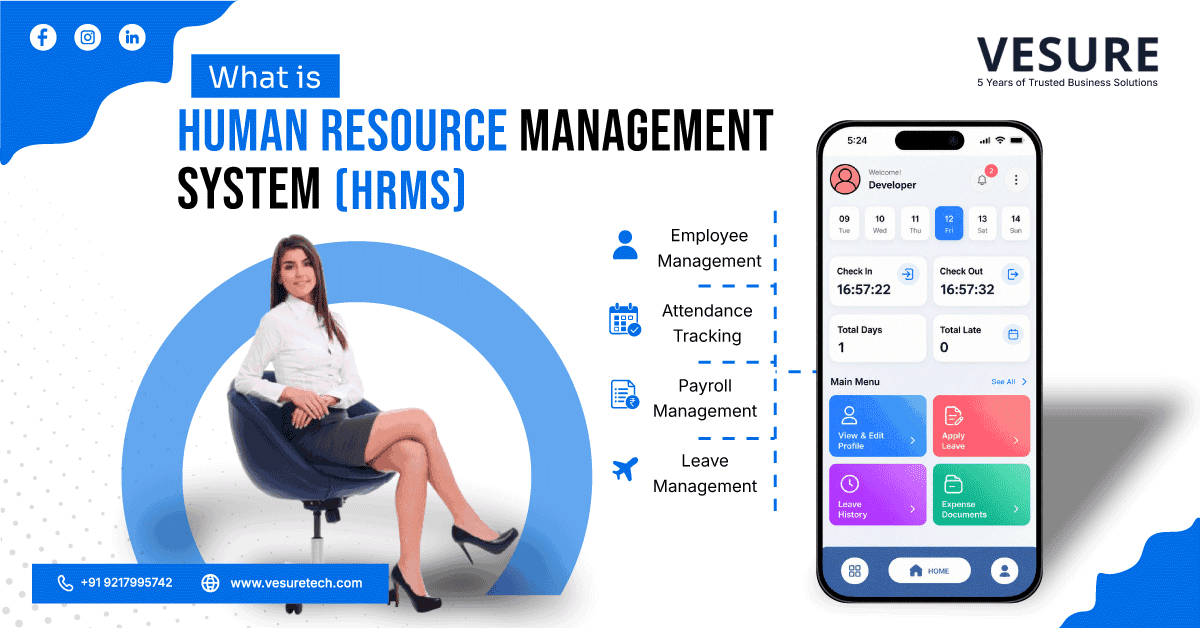
A Cloud Based HR Management System brings employee information, attendance, leave, payroll, performance, documents, reporting, and other HR workflows together on a central online platform. Instead of maintaining HR software on office computers or company-owned servers, employees and managers can access the system through the internet.
This guide explains what cloud-based HR software actually means, how it works day to day, what features and benefits matter, the challenges businesses should plan for, how cloud HR compares with traditional systems, and what to check before choosing a platform.
Quick Answer: What Is a Cloud Based HR Management System?
A cloud-based HR management system is an online HR platform that stores employee information and helps businesses manage processes such as payroll, attendance, leave, recruitment, performance, employee documents, reporting, and self-service.
The software is hosted on cloud infrastructure and accessed through the internet rather than being installed and maintained entirely on a company's own servers.
In simple terms:
Employee Data → Cloud HRMS → HR Workflows → Payroll, Attendance, Leave & Reports → Employees and Managers
The main advantage is having connected HR processes and data in one place instead of maintaining separate spreadsheets, files, applications, and manual workflows.
What Is Cloud Based HR Software?
Cloud-based HR software is a web-hosted platform designed to manage HR processes over the internet.
Instead of buying and maintaining your own HR server, the software provider hosts the platform and manages the underlying infrastructure. Your HR team, managers, and employees can access the system through supported web or mobile interfaces.
A cloud-based HR management system can centralize information such as:
- Employee profiles
- Attendance records
- Leave balances
- Payroll information
- Salary records
- Employee documents
- Performance information
- Recruitment and onboarding data
- HR reports
- Workforce analytics
This solves a surprisingly common problem: everyone working from a different version of the truth.
Without a centralized system, HR might have one employee's information in Excel, attendance in another system, salary details in payroll software, and leave approvals sitting in email or chat.
With a cloud HRMS, these workflows can be connected through a central platform.
You'll also see terms such as cloud HR software, cloud HRMS, HRMS software, HRIS, and cloud HR system used throughout the industry.
The terminology varies between vendors, so don't choose a platform simply because it calls itself an HRMS or HRIS. Look at what the system actually does.
How Does a Cloud Based HR Management System Work?
The basic idea is straightforward.
Instead of HR software being installed only on computers or servers inside your office, the application is hosted in cloud infrastructure and accessed online.
A typical workflow looks like this:
1. Employee information is added
HR creates or imports employee profiles containing relevant information such as job details, contact information, documents, salary information, and other required records.
2. HR policies and workflows are configured
The business sets up relevant attendance, leave, approval, payroll, and employee-management workflows.
3. Employees and managers access the system
Employees can use available self-service features, while managers can review requests, attendance information, or other workflows according to their permissions.
4. HR processes use shared information
Instead of repeatedly entering the same employee information into separate spreadsheets, connected HR workflows can use the same central records.
5. Payroll and attendance data can work together
Attendance, leave, salary information, and payroll processes can be connected where the platform supports those workflows.
6. Reports are generated from current data
HR teams can use available reports and dashboards to understand workforce information without manually combining multiple files every time.
That's the real difference.
It's not simply that the software is "online." It's that HR information and processes can operate from a connected system rather than a collection of disconnected tools.
What Does Cloud HRMS Software Typically Include?
A reasonably complete cloud HRMS software platform may include several HR functions.
Employee Information Management
Centralize employee profiles, job information, documents, and other HR records.
Attendance Management
Track working hours, attendance, shifts, overtime, and related information according to the organization's requirements.
Leave Management
Employees can submit leave requests while managers can review and approve them through a defined workflow.
Payroll Management
Automate salary calculations, deductions, payslip generation, payroll reports, and applicable compliance workflows.
Recruitment and Onboarding
Manage job postings, candidate information, interview scheduling, onboarding checklists, and employee documentation.
Employee Self-Service
Give employees access to relevant information and routine HR actions without making HR the middleman for every small request.
Performance Management
Manage goals, reviews, feedback, appraisals, and other performance-related workflows where supported.
Document Management
Store and organize employee documents digitally rather than relying on scattered physical files and folders.
Reporting and Analytics
Generate workforce reports and view HR information for planning and decision-making.
Mobile Access
Allow employees and managers to access relevant HR functions from supported mobile devices.
Integrations
Connect HR workflows with other business systems where required through available integrations or APIs.
For example, VeSure's HRMS Software brings employee management, recruitment, attendance, leave, payroll, performance, reporting, security, and other HR workflows into one SaaS-based platform.
Cloud HR vs. HRIS vs. HRMS vs. HCM: What's the Difference?
These terms are often used interchangeably, but they aren't always describing exactly the same thing.
|
Term |
What it generally means |
|
Cloud HR |
HR technology delivered through cloud infrastructure |
|
HR Software |
Broad term for software used to manage HR activities |
|
HRIS |
Human Resource Information System, generally focused on employee information and core HR records |
|
HRMS |
Human Resource Management System, generally covering a broader range of HR processes and workflows |
|
HCM |
Human Capital Management, often covering broader workforce, talent, and strategic HR functions |
The boundaries aren't rigid.
One provider might call its product an HRIS while another calls a similar platform an HRMS.
For a business evaluating software, the label matters less than the actual capabilities.
Ask:
- Does it manage employee records?
- Does it handle attendance?
- Does it support leave workflows?
- Can it manage payroll?
- Does it support employee self-service?
- Does it provide reporting?
- Can it integrate with existing systems?
- Can it scale as the organization grows?
That's a much more useful way to compare platforms.
If you're still getting familiar with the terminology, our guide on what an HRMS is and how it works provides a more detailed explanation.
Cloud HR Software vs. Traditional On-Premise HR Software
A lot of businesses are still on the fence here.
The distinction is relatively simple.
|
Factor |
Cloud HR Software |
Traditional On-Premise HR Software |
|
Hosting |
Provider-managed cloud infrastructure |
Company-managed infrastructure |
|
Access |
Usually available through the internet |
Usually tied to internal infrastructure or VPN |
|
Updates |
Typically managed by the provider |
Usually managed internally |
|
Hardware |
No dedicated HR server required |
Hardware and infrastructure may be required |
|
Scalability |
Generally easier to scale |
May require infrastructure changes |
|
Maintenance |
Provider manages platform infrastructure |
Internal IT manages infrastructure |
|
Remote access |
Usually built into the platform |
May require additional configuration |
|
Data security |
Shared responsibility between provider and customer |
Primarily managed by the organization |
|
Implementation |
Often faster, depending on complexity |
Can require infrastructure and IT setup |
|
Integrations |
Depends on available APIs/integrations |
Depends on internal architecture |
For most businesses, this isn't simply a question of which technology is newer.
It's about how much infrastructure the company wants to manage itself and how much flexibility it needs as the workforce changes.
Key Benefits of Cloud Based HR Management System
The benefits aren't just the usual "save time and improve productivity" claims.
The real value tends to show up in everyday HR work.
1. Access HR Information From Anywhere
A cloud HR system can allow authorized users to access HR information from different locations.
For distributed teams, remote employees, managers travelling between offices, or businesses operating across multiple locations, this can be much more practical than software restricted to an office network.
A manager can approve a leave request between meetings instead of waiting to get back to their desk.
2. Centralized Employee Data
One of the biggest advantages is having employee information in one system.
Instead of:
Excel + email + paper files + WhatsApp + separate payroll software
you can work toward:
One connected HR platform.
That reduces the amount of manual searching and duplicate data entry involved in routine HR work.
3. Less Repetitive HR Work
HR teams spend a surprising amount of time doing things that don't really require human judgment.
Copying employee information.
Preparing repetitive reports.
Checking leave balances.
Following up on approvals.
Collecting attendance information.
Cloud HR software can automate many of these repetitive workflows, giving HR more time for hiring, employee engagement, workforce planning, and other work that actually needs people.
4. Faster Payroll Processing
Payroll is one of those processes where a small mistake can become a very big conversation.
If employee information, attendance, leave, deductions, and payroll workflows are connected, there are fewer opportunities to repeatedly re-enter the same information.
The goal isn't simply "automation."
It's creating a more consistent payroll process with fewer manual touchpoints.
5. Better Employee Self-Service
Employees don't necessarily need HR involved every time they want to:
- Check attendance
- Apply for leave
- View a payslip
- Update permitted information
- Access company documents
- Check relevant HR information
A self-service portal can move these routine requests away from the HR inbox.
6. Real-Time HR Reporting
Instead of waiting for someone to combine several spreadsheets before a meeting, cloud HR platforms can provide access to current workforce information through reports and dashboards.
Depending on the platform, this can include:
- Headcount
- Attendance
- Leave
- Payroll
- Employee performance
- Workforce trends
Better data doesn't automatically mean better decisions, but it gives HR teams a much better starting point.
7. Easier Scalability
A system that works for 20 employees needs to work differently at 100, 500, or more.
Cloud-based platforms generally make it easier to add employees, locations, workflows, or modules without building an entirely new infrastructure every time the business grows.
That doesn't mean every cloud platform scales equally.
Scalability still needs to be checked during vendor evaluation.
8. Easier Updates and Maintenance
With traditional systems, updates can involve internal IT resources, software installations, hardware considerations, and downtime planning.
With a cloud platform, the provider generally manages platform updates and infrastructure maintenance.
The exact update process varies by vendor, so businesses should still ask how updates, maintenance windows, backups, and version changes are handled.
9. Better Integration With Other Business Systems
HR rarely exists in isolation.
Businesses may already use:
- Accounting software
- ERP systems
- Attendance devices
- Communication platforms
- Recruitment tools
- Finance systems
- Business intelligence tools
A cloud HRMS with suitable APIs or integrations can help information move between systems rather than requiring employees to manually copy it.
If integrations are important to your setup, review VeSure's API and integration services to understand how connected business workflows can be approached.
What Are the Key Features to Look for in Cloud HR Software?
A long feature list doesn't necessarily mean a better HR platform.
Start with the workflows your business actually needs.
Core HR
Employee profiles, organizational information, documents, and centralized records.
Attendance and Shift Management
Attendance tracking, working hours, shifts, overtime, and related workflows.
Payroll
Salary processing, deductions, payslips, payroll reports, and applicable compliance workflows.
Leave Management
Leave requests, approvals, balances, and policy-based workflows.
Employee Self-Service
A way for employees to access relevant HR information and complete routine requests.
Recruitment and Onboarding
Candidate tracking, interview scheduling, onboarding checklists, and document management.
Performance Management
Goals, reviews, appraisals, feedback, and performance records.
Reporting and Analytics
Useful reports that help HR teams understand what's happening across the workforce.
Mobile Accessibility
HR shouldn't necessarily stop working just because someone isn't sitting in front of a desktop computer.
Security and Access Control
Role-based access, authentication, encryption, backups, audit trails, and other appropriate security controls should be considered.
Integrations and APIs
Make sure the system can connect with the tools your business actually uses.
Cloud Based HR Management System for Indian Businesses
Cloud HR software can be particularly useful for Indian businesses because HR teams often have to manage a combination of employee administration, attendance, payroll, and statutory requirements.
Depending on the organization's location, workforce structure, and applicable laws, businesses may need to consider areas such as:
- Provident Fund (PF)
- Employees' State Insurance (ESI)
- Tax Deducted at Source (TDS)
- Professional Tax where applicable
- Payroll records
- Employee documentation
- Data protection and privacy requirements
The important point is that cloud software doesn't automatically make a company compliant.
The platform needs to support the applicable requirements, and the business still needs to configure and operate the system correctly.
When evaluating a cloud HRMS in India, ask the provider:
- How are statutory rules maintained?
- How quickly are regulatory changes reflected?
- Which states and payroll requirements are supported?
- How are payroll calculations validated?
- What reports are available for compliance purposes?
- How is employee data protected?
For businesses specifically concerned with payroll processes, it's also useful to understand the role of payroll compliance in HRMS before selecting a platform.
Is Cloud Based HR Software Secure?
This is probably one of the most common concerns businesses have.
The answer isn't simply "cloud is secure" or "on-premise is secure."
Security depends on how the system is designed, operated, configured, and monitored.
When evaluating a cloud HR platform, look for security measures such as:
- Encryption
- Role-based access control
- Authentication
- Access permissions
- Regular backups
- Audit trails
- Monitoring
- Data recovery procedures
- Security testing
- Appropriate certifications and security governance
Also ask who is responsible for what.
Cloud security is generally a shared responsibility. The provider is responsible for the security of its platform and infrastructure, while the customer still needs to manage things such as user permissions, passwords, access policies, and appropriate system configuration.
VeSure's HRMS product information includes role-based access control, data encryption, regular backups, audit trails, and data-protection controls. Explore VeSure HRMS security and features.
VeSure also displays CMMI, ISO 27001, and ISO 9001 certifications on its website. These credentials should be considered alongside the provider's actual security practices and policies rather than treated as a substitute for due diligence.
Common Challenges of Cloud HR Adoption
None of this is without trade-offs.
It's worth going in with your eyes open.
Data Migration
This is usually the first problem businesses underestimate.
Moving years of employee records from spreadsheets or an older system can uncover:
- Duplicate records
- Missing information
- Incorrect employee details
- Old documents
- Inconsistent formats
Audit the data before migration.
Don't wait until the migration is underway to discover that half the spreadsheet needs cleaning.
Internet Dependency
Cloud software depends on connectivity.
If you operate in locations with unreliable internet access, ask whether the platform provides appropriate alternatives or offline functionality for the workflows you actually need.
Don't assume every vendor handles this the same way.
Change Management
Employees who have used the same process for five years won't automatically love a new interface.
That's normal.
Role-specific training usually works better than one generic training session for everyone.
HR administrators, managers, and employees have different workflows, so train them accordingly.
Vendor Lock-In
Ask about your data before you sign the contract.
Specifically:
- Can you export employee data?
- In what format?
- Can documents be exported?
- Is there API access?
- What happens if you leave the platform?
- How long does data remain available after termination?
These questions are much easier to ask before implementation than after you've migrated years of records.
Integration Gaps
Your HRMS still needs to work with your existing technology.
A vendor saying "we integrate with everything" isn't enough.
Ask for documentation and confirm that the exact systems you use are supported.
Customization Limits
Cloud software often provides configurable workflows, fields, permissions, and reports.
But not every platform can accommodate every custom requirement.
Before signing up, separate your requirements into:
Must have
Important
Nice to have
That makes it much easier to identify where standard configuration is enough and where customization may be required.
Signs Your Business Needs Cloud HR Software
There are some pretty obvious warning signs.
You may be ready for a cloud-based HR management system if:
- Your HR team spends more time preparing reports than acting on them.
- Payroll errors keep appearing because information is entered multiple times.
- Employee records are spread across different files.
- Leave approvals happen through email or chat.
- Employees constantly ask HR for information they should be able to access themselves.
- Your workforce is spread across multiple locations.
- Remote or hybrid employees make office-based HR systems difficult to use.
- Attendance data has to be manually transferred into payroll.
- You're spending too much time maintaining old HR software.
- Your company has outgrown the spreadsheets it started with.
The important thing isn't a specific employee count.
It's process complexity.
A 20-person business with multiple locations and complex shifts may need HR software sooner than a 100-person business with very simple workflows.
Who Should Use Cloud-Based HR Software?
Cloud HR software can be useful for:
Startups
Especially when HR processes are moving beyond spreadsheets and messaging apps.
For a deeper look at this use case, see our guide to HRMS software for startups.
Small and Mid-Sized Businesses
Businesses can centralize employee records and automate repetitive HR processes without maintaining traditional HR infrastructure.
Multi-Location Businesses
A central system can make it easier to manage employee information, attendance, leave, and payroll across different locations.
Remote and Hybrid Teams
Cloud access can make HR workflows available to employees and managers regardless of where they work.
Growing Organizations
Businesses that expect their headcount, locations, or HR requirements to increase can evaluate whether the platform can scale alongside them.
When Should a Business Move to Cloud HR?
There isn't one magic employee number.
The better question is:
How much HR complexity can your current process realistically handle?
If HR is spending hours every month:
- fixing spreadsheets,
- reconciling attendance,
- chasing approvals,
- preparing payroll,
- answering routine employee questions,
- or manually building reports,
then the organization may already be paying the hidden cost of not having an integrated HR system.
Don't wait until the process completely breaks.
The best time to evaluate HR software is usually before the manual process becomes an operational emergency.
How to Choose the Right Cloud HRMS Software
Dozens of HR platforms can look almost identical during a sales demo.
That's why your evaluation process matters.
1. Define Your Must-Have Modules
Start with the workflows you can't operate without.
For example:
- Employee management
- Attendance
- Leave
- Payroll
- Recruitment
- Performance
- Employee self-service
- Reporting
Don't choose a platform because it has 100 features if the five features you actually need aren't good.
2. Check India-Specific Requirements
If you operate in India, verify support for the applicable payroll and statutory requirements.
Ask specifically about:
- PF
- ESI
- TDS
- Professional Tax where applicable
- Payroll reports
- Regulatory updates
Don't accept a vague "yes, we're compliant."
Ask how it works.
3. Test the Mobile Experience
Don't judge mobile functionality from a sales presentation.
Actually test it.
Try:
- Leave approval
- Attendance access
- Payslip viewing
- Employee profile access
- Notifications
If employees and managers find the process frustrating, adoption will suffer.
4. Ask About Implementation
Find out:
- What data needs to be migrated?
- Who handles migration?
- How long does setup take?
- What configuration is required?
- Is training included?
- What happens during go-live?
A technically powerful system that takes forever to implement may not be the right fit for your business.
5. Review Security
Ask about:
- Encryption
- Access control
- Authentication
- Backups
- Audit logs
- Security certifications
- Data retention
- Data export
- Disaster recovery
Security shouldn't be a checkbox at the end of the buying process.
6. Review Integrations
Identify your existing systems first.
Then check whether the HRMS can connect to them.
This is especially important if you already use:
- ERP software
- Accounting systems
- Biometric attendance
- Payroll systems
- Recruitment tools
- Communication platforms
7. Understand Data Portability
Ask how easy it is to export your information.
A good HR software evaluation should consider not just:
"How do we get our data into this platform?"
but also:
"How do we get our data out?"
8. Talk to Existing Users
A polished case study is useful.
But if possible, speak with an actual customer.
Ask them:
- Was implementation smooth?
- How responsive is support?
- How easy is employee adoption?
- Were integrations difficult?
- How reliable is payroll?
- What happens when something goes wrong?
Those answers can reveal things a product demo won't.
Cloud HRMS Evaluation Checklist
Before choosing a platform, use this checklist.
|
Question |
What to Verify |
|
Does it support core HR? |
Employee profiles, records and documents |
|
Does it support attendance? |
Working hours, shifts, overtime and integrations |
|
Does it support leave? |
Requests, approvals and balances |
|
Does it support payroll? |
Salary calculations, deductions and payslips |
|
Does it support Indian requirements? |
Applicable PF, ESI, TDS and other requirements |
|
Is employee self-service available? |
Employee access to routine HR tasks |
|
Is mobile access available? |
Actual mobile workflow, not just a mobile-responsive website |
|
How secure is it? |
Encryption, access control, backups and governance |
|
Can it integrate? |
APIs and existing business systems |
|
Can data be exported? |
Formats, documents and process |
|
Can it scale? |
Employees, locations, modules and workflows |
|
What support is available? |
Onboarding, training and technical support |
|
How long is implementation? |
Migration, configuration and go-live |
|
What can be customized? |
Fields, workflows, reports and permissions |
Steps to Implement Cloud-Based HR Software Successfully
Choosing the software is only half the job.
Implementation matters just as much.
Step 1: Define Your Goals
Before evaluating vendors, decide what success means.
For example:
- Faster payroll processing
- Fewer manual errors
- Better employee self-service
- Centralized employee records
- Easier attendance tracking
- Faster reporting
Step 2: Map Your Current HR Processes
Document how you currently handle:
- Hiring
- Onboarding
- Attendance
- Leave
- Payroll
- Performance
- Employee documents
- Reporting
This makes it easier to identify what should be automated.
Step 3: Clean Your Existing Data
Don't migrate messy data just because you can.
Review:
- Duplicate employee records
- Missing information
- Old employees
- Incorrect salary information
- Document formats
- Attendance history
Clean first.
Migrate second.
Step 4: Configure the System
Set up:
- Roles
- Permissions
- Workflows
- Leave policies
- Attendance rules
- Payroll requirements
- Reporting
Step 5: Run a Pilot
If possible, start with one department, location, or group of employees.
A pilot gives you a chance to identify problems before everyone is using the system.
Step 6: Train Users by Role
HR administrators need different training from managers.
Managers need different training from employees.
Keep training practical.
Show them the workflows they'll actually use.
Step 7: Go Live in Phases
Where possible, avoid turning off the old process immediately.
Keep a short transition period so you have a fallback while users become comfortable with the new system.
Step 8: Measure Adoption
After implementation, check:
- How many employees are actively using self-service?
- Are managers approving requests digitally?
- Are reports being generated from the system?
- Are manual spreadsheets still being maintained?
- Where are employees getting stuck?
The goal isn't simply to install HR software.
The goal is to actually reduce manual HR work.
Common Myths About Cloud HR Software
"Cloud HR systems aren't secure."
Not necessarily.
A reputable cloud provider can implement encryption, access controls, backups, monitoring, and security governance at a level that may be difficult for some businesses to maintain internally.
But security still needs to be evaluated provider by provider.
"Cloud HR software is only for large enterprises."
Not anymore.
Cloud delivery can work for startups, small businesses, mid-sized companies, and larger organizations.
The important question is whether the platform matches the organization's actual requirements.
"Moving to the cloud means losing historical data."
Not if migration is planned correctly.
Historical records can be migrated when the source data is clean, the migration process is properly mapped, and the transferred information is validated.
The bigger risk is usually poor preparation.
"Cloud HR software can't be customized."
Modern platforms often provide configurable workflows, fields, permissions, reports, and integrations.
However, customization capabilities vary significantly between products.
Always test the workflows you actually need.
"Cloud HR software automatically makes us compliant."
No.
Software can support compliance workflows and automate calculations or records, but businesses still need to configure the system correctly and meet their legal responsibilities.
This distinction is especially important for payroll and statutory compliance.
Why Consider VeSure for Cloud-Based HR Management?
Once you've defined what you actually need from a cloud HRMS, the next step is evaluating whether a platform can deliver those requirements in practice.
VeSure HRMS is a SaaS-based human resource management system designed to bring core HR workflows into one platform.
Its current HRMS capabilities include:
- Employee information management
- Recruitment and onboarding
- Attendance management
- Leave management
- Shift scheduling
- Payroll processing
- Employee self-service
- Performance management
- Document management
- Compliance and reporting
- Analytics
- Role-based access control
- Data encryption
- Regular backups
- Mobile/web access
The important part isn't the size of the feature list.
It's whether those features fit your actual workflow.
For example, if your HR team currently manages employee records in one place, attendance somewhere else, and payroll through another process, the value of an integrated HRMS is bringing those workflows together.
VeSure's platform is positioned for growing businesses and supports access through cloud-based SaaS technology.
If you're evaluating HRMS options, the best next step is to test the workflows you actually care about rather than sitting through a generic feature presentation.
Final Thoughts
Moving to a cloud-based HR management system isn't really about ditching paperwork, even though that's the part people notice first.
It's about changing how HR information moves through the business.
Instead of:
Employee → Email → HR → Spreadsheet → Manager → Payroll
you can build a much more connected process:
Employee → Cloud HRMS → Approval → Payroll/HR Workflow → Reporting
That means less time spent searching for information, copying data between files, chasing approvals, and preparing repetitive reports.
But don't choose cloud HR software simply because everyone else is moving to the cloud.
Start with your actual problems.
Map the HR processes that are consuming the most time. Identify the features you genuinely need. Check security and compliance requirements. Test the product with real scenarios. Ask about implementation and data portability. Then choose the platform that fits the way your business actually works.
That's usually what separates a smooth HR software rollout from another expensive system that employees stop using after the first few months.
If you want to see how a cloud HRMS can handle your own workflows, book a free demo with VeSure - Trusted SaaS Software Company and walk through the processes that matter to your team.
Cloud-Based HR Management System: Frequently Asked Questions
What is a cloud-based HR management system?
A cloud-based HR management system is an online platform that stores employee information and manages HR processes such as employee records, attendance, leave, payroll, recruitment, performance, reporting, and employee self-service.
How does cloud HR software work?
Cloud HR software is hosted on cloud infrastructure and accessed through the internet. Authorized users log into the platform, while employee information and HR workflows are managed centrally.
What is the difference between cloud HR software and traditional HR software?
Cloud HR software is generally hosted by the provider and accessed online, while traditional on-premise HR software is installed and maintained on infrastructure controlled by the business. Cloud platforms generally require less internal infrastructure management and make remote access easier.
What are the benefits of cloud-based HR software?
Common benefits include centralized employee data, remote access, HR automation, employee self-service, real-time reporting, easier updates, scalability, and integration with other business systems.
Is cloud HR software suitable for small businesses?
Yes. Cloud HR software can be useful for small businesses because it can centralize HR processes without requiring the business to maintain its own HR infrastructure. The right platform should still match the company's size, workflows, budget, and technical requirements.
Is cloud-based HR software secure?
It can be, provided the provider implements appropriate security measures. Businesses should evaluate encryption, authentication, access controls, backups, audit trails, security governance, certifications, and data-handling practices before selecting a platform.
Can cloud HR software manage payroll?
Many HRMS platforms include payroll management. Depending on the platform, this can include salary calculations, deductions, payslip generation, payroll reports, and applicable statutory workflows.
Can cloud HR software support PF, ESI and TDS?
Some cloud HRMS platforms support Indian payroll and statutory requirements such as PF, ESI and TDS. Businesses should verify exactly which requirements are supported and how regulatory updates are handled before implementation.
Can employees access cloud HR software from mobile devices?
Many modern cloud HR platforms provide mobile or mobile-responsive access. However, businesses should test the actual mobile workflows they expect employees and managers to use.
What features should a cloud HRMS have?
Core features to evaluate include employee management, attendance, leave, payroll, recruitment, onboarding, employee self-service, performance management, reporting, mobile access, security, and integrations.
What is the difference between HRIS and HRMS?
HRIS generally focuses on employee information and core HR records, while HRMS typically covers a broader set of HR processes such as payroll, attendance, leave, and workforce workflows. However, vendors use these terms differently, so actual functionality matters more than the label.
How long does it take to implement a cloud HRMS?
Implementation time depends on company size, data quality, number of modules, integrations, customization, and implementation requirements. A relatively simple setup may be completed quickly, while a complex multi-location implementation can take considerably longer.
What should businesses check before choosing cloud HR software?
Businesses should evaluate features, security, compliance support, integrations, data migration, scalability, mobile experience, implementation, customer support, customization, and data portability.
Is cloud HR software better than on-premise HR software?
There isn't one answer for every business. Cloud HR software can offer easier remote access, provider-managed infrastructure, and simpler updates. On-premise systems may be preferred by organizations with specific infrastructure, security, offline, or control requirements. The right choice depends on the business's operational and technical needs.